
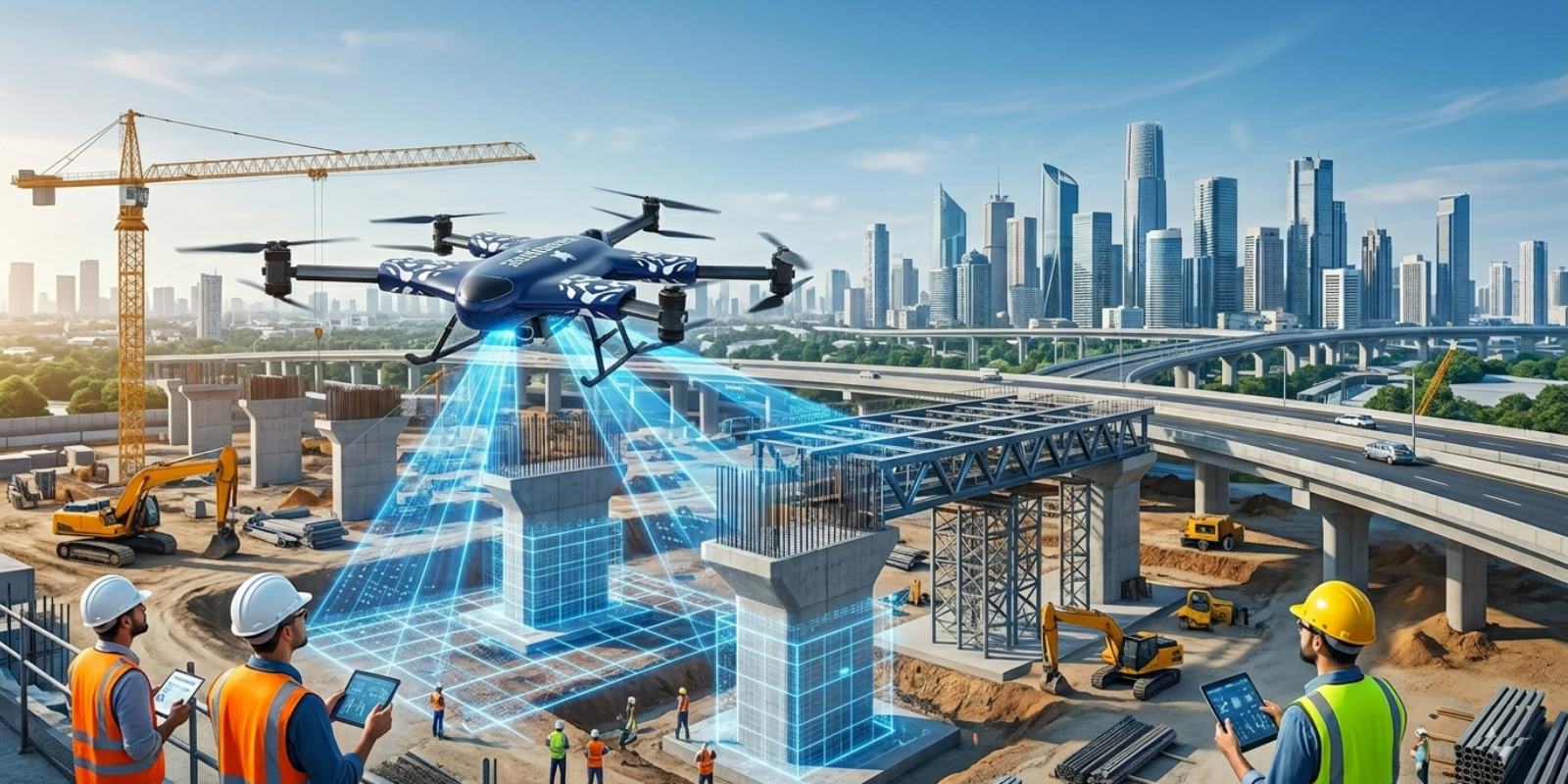
The construction industry has witnessed remarkable technological advancements over the past decade, and one of the most significant innovations is the adoption of drone technology. From large-scale infrastructure projects to residential developments, drones are helping construction professionals improve efficiency, enhance safety, and reduce operational costs.
Modern infrastructure projects require precise planning, continuous monitoring, and accurate data collection. Traditional methods often involve significant labor, time, and expenses. However, construction drone technology has emerged as a game-changing solution that enables project managers, engineers, and contractors to make informed decisions while maintaining project timelines.
In today’s competitive construction environment, organizations are increasingly leveraging drones to streamline workflows, optimize resource allocation, and improve overall project outcomes. As drone capabilities continue to evolve, their role in construction and infrastructure development becomes even more critical.
The Growing Importance of Drone Technology in Construction
Infrastructure development projects are becoming increasingly complex, requiring advanced tools to manage various phases of construction effectively. Drone technology provides a comprehensive solution for capturing real-time data, monitoring progress, and ensuring project accuracy.
Construction professionals utilize drones to gather aerial imagery, create detailed site maps, and conduct inspections that would otherwise require extensive manpower. These capabilities enable teams to identify potential issues early, reducing delays and minimizing costly mistakes.
Additionally, drones provide valuable insights throughout the project lifecycle, from initial site assessment to final project completion. This level of visibility helps stakeholders make better decisions and maintain greater control over construction activities.
Enhanced Surveying and Site Mapping
One of the most valuable applications of drones in infrastructure development is site surveying and mapping. Traditional surveying methods can be time-consuming and labor-intensive, often requiring teams to spend days or even weeks collecting data.
Drone technology significantly accelerates this process by capturing high-resolution aerial images and generating accurate topographic maps within hours. These maps provide engineers and planners with detailed information about terrain conditions, elevation changes, and site characteristics.
Benefits of drone-based surveying include:
- Faster data collection
- Improved accuracy and precision
- Reduced surveying costs
- Enhanced project planning
- Better terrain analysis
- Real-time updates for changing site conditions
By utilizing aerial mapping technology, construction teams can develop more effective project plans and reduce the likelihood of unforeseen challenges during execution.
Improving Construction Site Monitoring
Construction projects require continuous monitoring to ensure activities are progressing according to schedule. Drone technology offers a practical solution by providing regular aerial updates and comprehensive site visibility.
Project managers can use drones to capture images and videos from multiple angles, creating a detailed record of project progress. This information can be shared with stakeholders, clients, and team members to maintain transparency and facilitate communication.
Regular drone inspections help identify:
- Delays in construction activities
- Equipment placement issues
- Material shortages
- Safety concerns
- Quality control problems
- Potential project risks
With access to accurate and timely information, project teams can quickly address challenges and maintain productivity throughout the construction process.
Increasing Safety on Construction Sites
Safety remains a top priority in infrastructure development projects. Construction sites often present numerous hazards, including elevated structures, heavy machinery, and difficult terrain.
Drone technology contributes significantly to workplace safety by reducing the need for workers to access dangerous areas. Instead of climbing scaffolding, towers, or bridges for inspections, drones can capture detailed images and videos from a safe distance.
Key safety benefits include:
Reduced Human Exposure to Risks
Drones eliminate the need for personnel to perform inspections in hazardous environments, minimizing the risk of accidents and injuries.
Faster Hazard Identification
Aerial inspections enable teams to detect potential safety issues before they become serious problems, improving overall site safety management.
Emergency Response Support
In emergency situations, drones can quickly assess site conditions and provide valuable information to response teams.
By integrating drone technology into safety protocols, construction companies can create safer working environments while maintaining operational efficiency.
Supporting Infrastructure Inspection and Maintenance
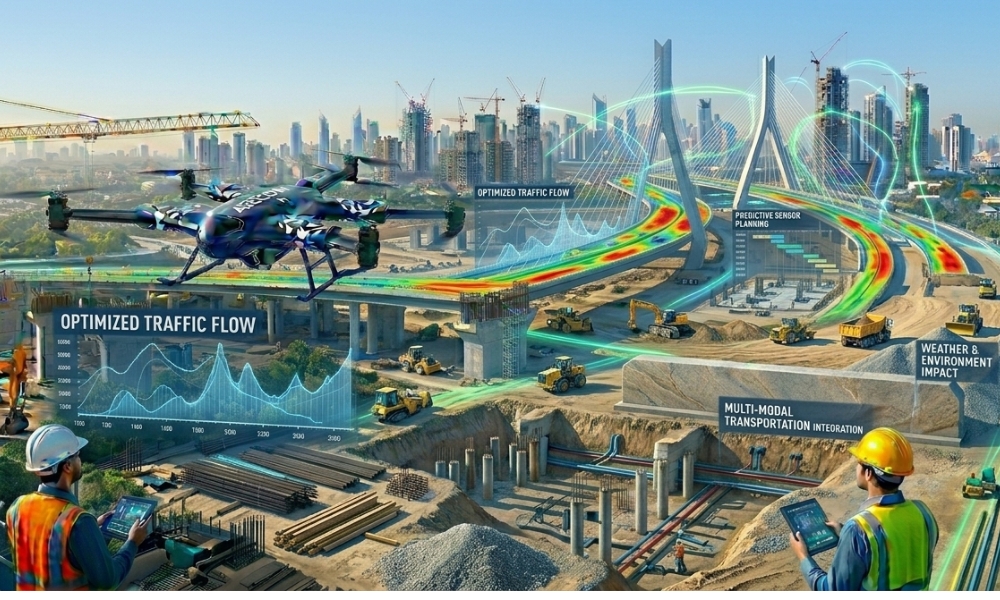
Infrastructure assets such as roads, bridges, tunnels, and utility systems require regular inspections to ensure structural integrity and long-term performance. Traditional inspection methods can be expensive, disruptive, and time-consuming.
Drones provide an efficient alternative by enabling rapid inspections without disrupting traffic or construction activities. High-resolution cameras and advanced sensors allow inspectors to identify cracks, corrosion, and other structural issues with remarkable accuracy.
Advantages of drone inspections include:
- Reduced inspection costs
- Faster assessment times
- Improved data accuracy
- Minimal operational disruptions
- Enhanced documentation capabilities
As infrastructure networks continue to expand, drone-based inspection solutions are becoming increasingly valuable for maintenance and asset management programs.
Better Project Planning Through Data Analytics
Modern drones are equipped with sophisticated sensors and imaging technologies that generate large volumes of valuable data. This information can be processed using advanced analytics software to support project planning and decision-making.
Construction teams can analyze drone-collected data to:
- Monitor project performance
- Track resource utilization
- Evaluate site conditions
- Predict potential delays
- Improve workflow efficiency
Data-driven insights help project managers optimize operations and make informed decisions that contribute to project success.
Furthermore, historical drone data can be used to improve planning for future projects, creating long-term benefits for construction organizations.
Cost Savings and Operational Efficiency
Cost control is a critical factor in infrastructure development. Construction projects often face budget constraints, making efficiency improvements highly valuable.
Drone technology helps reduce costs in several ways:
- Lower Labor Requirements
Automated aerial surveys and inspections require fewer personnel compared to traditional methods.
- Reduced Equipment Expenses
Drones can replace certain specialized equipment used for inspections and site assessments.
- Improved Resource Management
Accurate data enables better allocation of materials, equipment, and labor resources.
- Early Problem Detection
Identifying issues before they escalate helps avoid costly rework and project delays.
These efficiencies contribute to improved profitability and greater project success rates.
Environmental Benefits of Drone Technology
Sustainability is becoming an increasingly important consideration in construction and infrastructure development. Drone technology supports environmentally responsible practices by minimizing resource consumption and reducing project impacts.
Drones help organizations:
- Reduce fuel usage associated with traditional surveying methods
- Minimize site disturbances
- Improve environmental monitoring
- Support sustainable project planning
- Reduce unnecessary travel requirements
By providing accurate environmental data, drones enable construction teams to make decisions that balance project objectives with environmental responsibility.
Future Trends in Construction Drone Technology
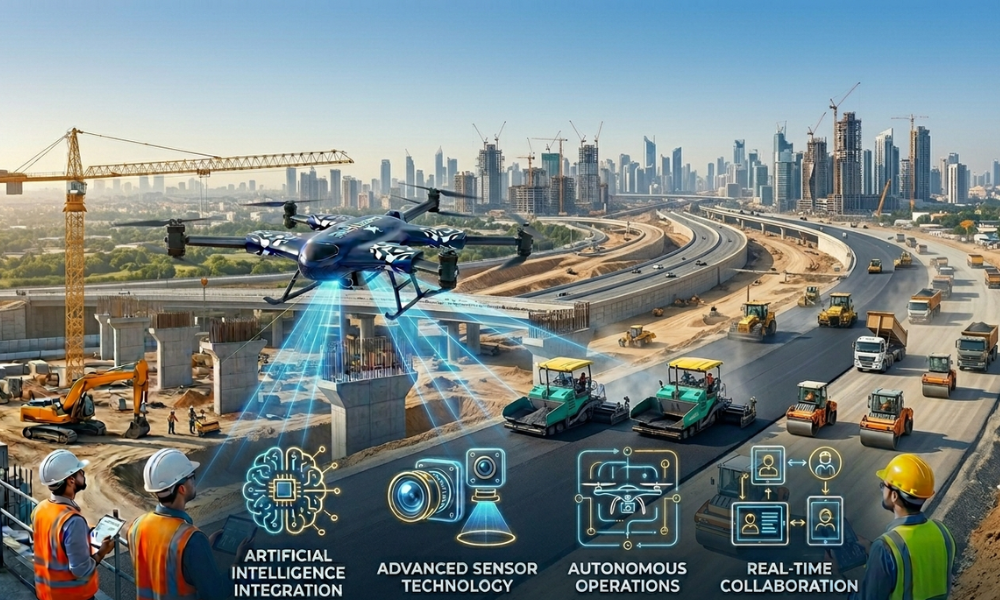
The future of drone technology in infrastructure development looks exceptionally promising. Emerging innovations are expected to further enhance drone capabilities and expand their applications.
Key trends include:
Artificial Intelligence Integration
AI-powered drones will be able to analyze data automatically, identify issues, and generate actionable insights with minimal human intervention.
Advanced Sensor Technology
Future drones will feature more sophisticated sensors capable of capturing highly detailed environmental and structural information.
Autonomous Operations
Autonomous flight systems will improve efficiency by enabling drones to perform routine inspections and monitoring tasks independently.
Real-Time Collaboration
Enhanced connectivity will allow stakeholders to access drone data instantly, improving communication and decision-making.
These advancements will continue to drive innovation and create new opportunities for infrastructure development projects worldwide.
Why Construction Companies Are Adopting Drone Solutions
The widespread adoption of construction drone technology reflects its proven value across various project types. Organizations are recognizing the benefits of improved efficiency, enhanced safety, and more accurate data collection.
As competition increases within the construction industry, companies that embrace innovative technologies gain a significant advantage. Drones enable teams to complete projects more effectively while maintaining high standards of quality and safety.
From surveying and mapping to inspections and project monitoring, drone technology has become an essential tool for modern infrastructure development. For more updates visit healthy tips space and get information here.
Conclusion
Construction drone technology is transforming the way infrastructure projects are planned, managed, and executed. By providing accurate data, improving safety, reducing costs, and enhancing project visibility, drones are helping organizations achieve better outcomes across a wide range of construction activities.
As technological advancements continue to expand drone capabilities, their importance within the construction industry will only grow. Companies that invest in drone solutions today are positioning themselves for greater efficiency, competitiveness, and long-term success.
For organizations involved in infrastructure development, adopting advanced drone technologies is no longer just an option—it is becoming a necessity in an increasingly digital and data-driven construction landscape.